
 fastfixoffice@yahoo.com
 Book Appointment
 It usually happens at the worst time. You hit the opener, hear a loud snap, and suddenly your garage door won’t move. Or maybe it lifts a few inches and stops. That’s often the moment a garage door spring gives out.
If you’re dealing with this right now, don’t panic. A broken garage door spring is common, but it does need quick attention. In most cases, timely garage door spring repair can get things back to normal faster than you’d expect. More importantly, there are a few things you should and shouldn’t do right away to stay safe and avoid making things worse.
Let’s walk through it step by step so you know exactly what’s going on and what to do next.
First Things First: Is It Really a Broken Spring?
Before jumping into action, it helps to confirm what you’re dealing with.
Garage door springs carry the weight of the door. When they break, the system loses balance. That’s why the door suddenly feels extremely heavy or won’t open at all.
Here are a few clear signs:
- You heard a loud bang from the garage
- The door won’t open, or only opens a few inches
- The opener strains or stops midway
- The door feels unusually heavy when lifted manually
- You can see a visible gap in the spring
Most homes have either torsion springs (mounted above the door) or extension springs (along the sides). If one of them snaps, the door won’t function properly.
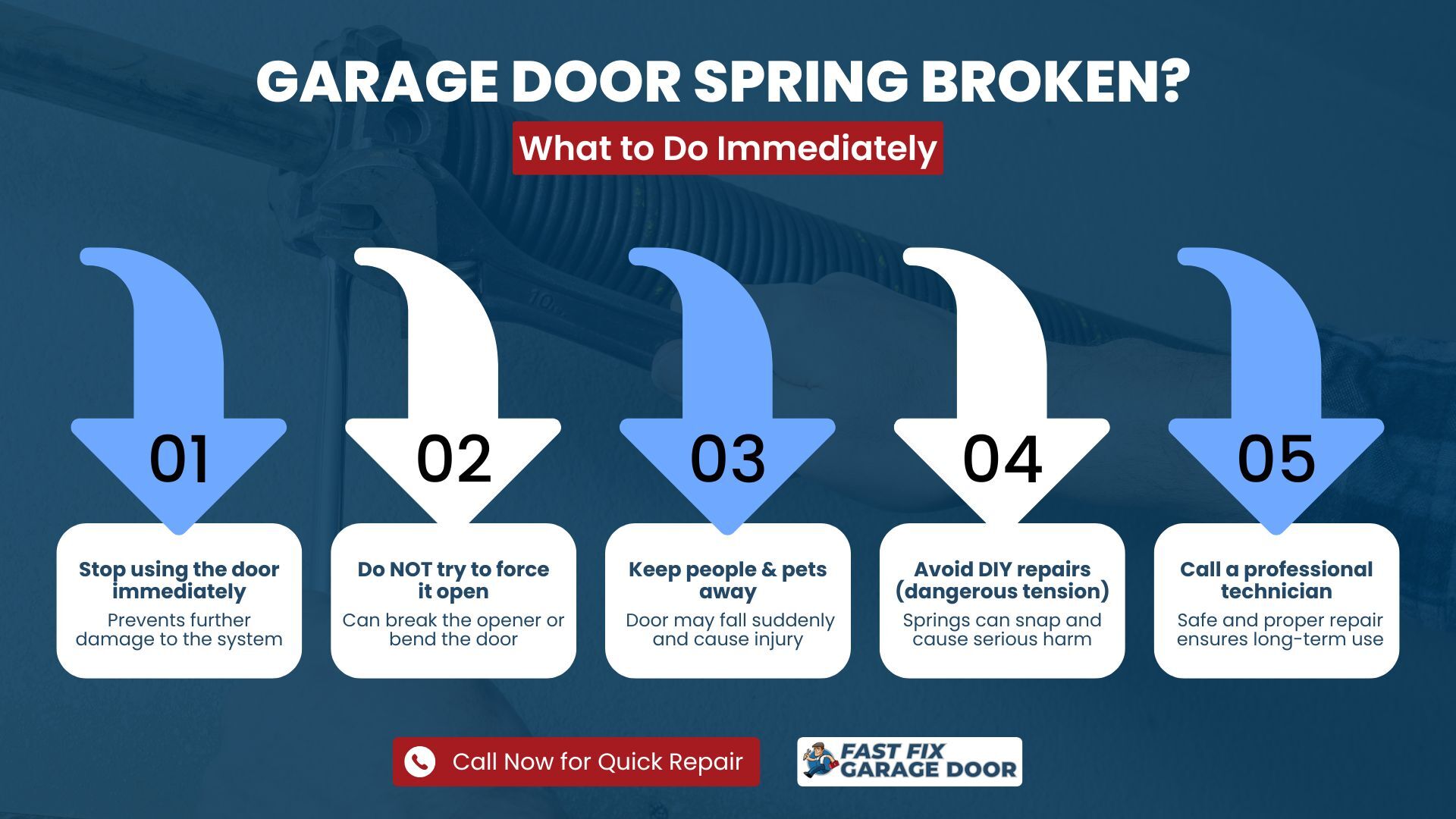
Stop Using the Door Immediately
This part matters more than people think.
Once a spring breaks, the entire system is off balance. Trying to force the door open or closed can:
- Burn out the garage door opener
- Bend the tracks or panels
- Cause the door to slam shut unexpectedly
It’s tempting to “just try one more time,” especially if you’re in a rush. But that can turn a simple repair into a much bigger job.
If the door is stuck open, avoid standing underneath it. If it’s closed, leave it that way until it’s fixed.
Don’t Try to Fix the Spring Yourself
This is where a lot of homeowners get into trouble.
Garage door springs are under extreme tension. That tension is what allows the door to lift smoothly. When handled incorrectly, that stored energy can be released suddenly and cause serious injury.
Even watching a few online videos doesn’t make it safe. It’s not like replacing a light fixture or tightening a hinge.
Here’s why DIY spring repair is risky:
- Springs are tightly wound and can snap violently
- Special tools are required to handle the tension safely
- One wrong move can damage other parts of the system
- Injuries from springs can be severe
It’s one of those jobs where calling a trained technician isn’t just convenient, it’s the safer route.
Secure the Area Around the Door
While you’re waiting for help, take a minute to make the space safe.
If the garage door is stuck in an open position:
- Keep people and pets away from the opening
- Avoid parking underneath the door
- If possible, use clamps or locking pliers on the track to prevent movement
If the door is closed:
- Avoid trying to lift it manually
- Use another entry point to access your home if needed
It’s a simple step, but it helps prevent accidents while you figure out the next move.
Understand Why Springs Break in the First Place
It might feel random, but there’s usually a reason behind it.
Most garage door springs are rated for a certain number of cycles. One cycle equals one full open and close. Over time, the metal weakens and eventually snaps.
Common causes include:
1. Normal Wear and Tear
This is the biggest one. After years of daily use, springs simply wear out.
2. Rust and Corrosion
Moisture can cause rust to build up on the spring, which weakens it and increases friction.
3. Temperature Changes
Cold weather can make metal more brittle. That’s why springs often break during the winter months.
4. Poor Maintenance
Lack of lubrication or regular checks can shorten the lifespan of the springs.
Even with good care, springs don’t last forever. It’s just part of owning a garage door system.
What a Technician Will Actually Do
If you’ve never dealt with this before, you might wonder what happens during a repair visit.
A trained technician will:
- Inspect the entire system, not just the broken spring
- Identify the correct spring size and type
- Safely release any remaining tension
- Install new springs and rebalance the door
- Test the opener and safety features
It’s not just about swapping out a part. The door needs to be properly balanced so it opens smoothly and safely.
In many cases, both springs are replaced even if only one breaks. That’s because they usually wear out at the same rate.
How Long Does It Take to Fix?
Most spring replacements are quicker than people expect.
In many cases, the repair can be completed within 1 to 2 hours, depending on the setup and condition of the system.
Same-day service is often available, especially if the door is stuck and affecting access to your home or vehicle.
What About Cost?
The price can vary depending on a few factors:
- Type of spring (torsion vs extension)
- Size and weight of the door
- Number of springs being replaced
- Labor and service fees
While it’s not the cheapest repair, it’s also not something you want done poorly. A properly installed spring lasts longer and keeps your system running smoothly.
Can You Prevent This From Happening Again?
You can’t completely avoid it, but you can reduce the chances of sudden failure.
A little maintenance goes a long way.
Simple things that help:
- Apply garage door lubricant to springs every few months
- Listen for unusual noises during operation
- Schedule occasional inspections
- Replace springs before they reach the end of their cycle life
If your door is more than a few years old and gets heavy daily use, it’s worth keeping an eye on those springs.
What If Your Car Is Trapped Inside?
This is a pretty common situation.
If the spring is broken and the door won’t open, your car might be stuck in the garage. In some cases, you can manually lift the door, but it’s not always safe.
If you do attempt it:
- Get help from another person
- Lift carefully and evenly
- Be prepared for the full weight of the door
That said, it’s usually better to wait for a technician unless it’s an emergency.
When It’s More Than Just the Spring
Sometimes a broken spring reveals other issues.
For example:
- Worn cables
- Misaligned tracks
- Weak opener motor
- Damaged rollers
A good inspection will catch these problems early, which can save you from future breakdowns.
Choosing the Right Repair Service
Not all repair services are the same, and when you’re dealing with something this important, it’s worth choosing carefully.
Look for:
- Local experience and familiarity with the area
- Clear pricing with no hidden fees
- Good customer reviews
- Quick response times
If you’re in the area and need fast help, services like Fast Fix Garage Door are built around quick response and straightforward repairs without unnecessary upsells.
A Quick Reality Check
A broken garage door spring can feel like a big disruption. Your routine gets thrown off, your car might be stuck, and the door itself becomes unusable.
But the good news? It’s a very fixable problem.
With the right approach, it usually turns into a same-day repair, and your door is back to normal before you know it.
The main thing is knowing what to do in those first few minutes after it happens.
Final Thoughts
When a garage door spring breaks, the safest move is also the simplest one: stop using the door and call for help.
Trying to force it or fix it yourself can make things worse, and in some cases, dangerous.
Take a moment to secure the area, avoid unnecessary risks, and get a trained technician involved. If you’re dealing with this in your area, Fast Fix Garage Door can handle spring replacements quickly and get your system working again without the stress.
A broken spring might stop your day for a bit, but it doesn’t have to turn into a bigger problem.