
 fastfixoffice@yahoo.com
 Book Appointment
 TL;DR
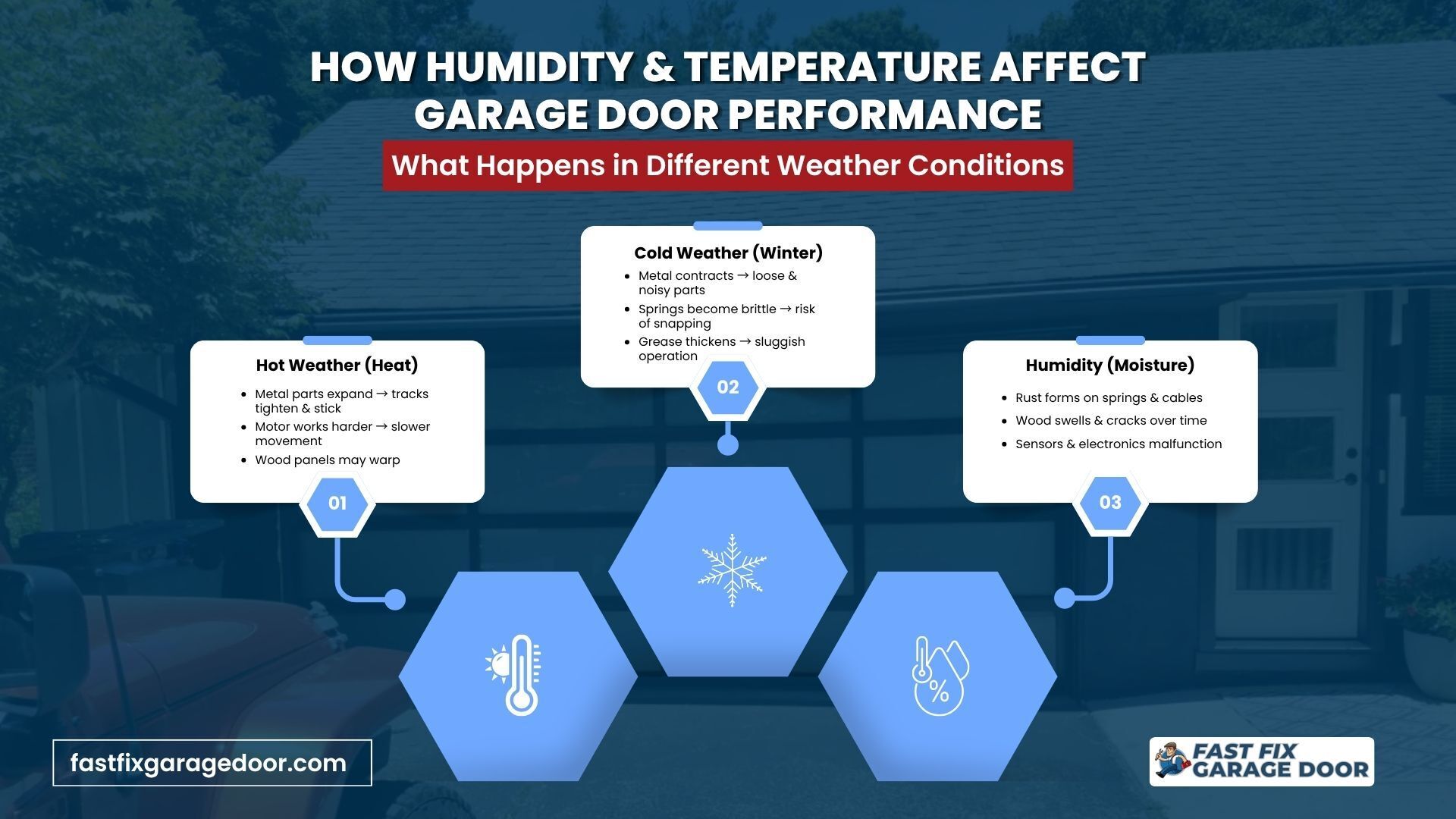
Hot weather expands metal tracks and swells wooden panels, which causes tracks to bind and doors to stick. Cold weather makes steel brittle and thickens the grease inside springs, making the door heavy and loud. Humidity speeds up rust, warps wood, and damages sensors. All of it shortens your door’s life if you don’t handle it.
Ever walked into your garage on a sticky July afternoon and wondered why your door sounds like it’s fighting for its life? Or stood there on a frigid January morning while it creaks and groans its way up? You’re not imagining things. Garage doors are sensitive to weather in ways most homeowners never think about. The way humidity and temperature affect garage door performance interacts with everything from how smoothly the door opens to how long the parts last, and ignoring those effects is one of the main reasons doors fail earlier than they should.
We’ve seen it play out on service calls for years. The same door that worked fine in April starts acting up in July. Homeowners blame the opener, replace the remote, or try a new battery. Meanwhile, the actual problem is the weather doing what it does to metal, wood, and rubber.
Why Temperature Matters So Much
Metal expands when it heats up and contracts when it cools down. That’s physics class stuff, and it applies to every part of your garage door. The tracks, the hinges, the rollers, the springs, the torsion bar. All of it shifts size by tiny amounts as the thermometer moves. Those small shifts add up to real problems over a full year of weather swings.
In hot months, the metal tracks can expand enough to pinch the rollers, causing binding and rubbing. The motor has to push harder. The rollers wear out faster. In cold months, the metal shrinks, and the gaps between parts get looser, which can create rattles, misalignments, and slower response times. And springs, which are under constant tension, get brittle in the cold. A spring that survived three warm winters might finally snap on the first really cold morning of the year.
Humidity Is the Sneaky One
Most homeowners think about temperature but forget about humidity. That’s a mistake, because moisture is often the bigger long-term problem. Humid air carries water into every corner of the garage. That water settles on metal parts, soaks into wooden doors, sneaks into the electrical contacts of your opener, and fogs up the photo eyes on the safety sensors.
Over time, humidity does three things to a garage door. It causes rust on springs, cables, and hardware. It warps wood panels, changing how the door fits in the frame. And it messes with the electronics, causing random opener failures that feel like ghost problems because they come and go with the weather.
Hot Weather Problems You Might Notice
Summer heat creates a specific set of symptoms. If you live in a hot climate like Dallas or Phoenix, or Houston, you’ve probably noticed some of these:
- The door moves more slowly during peak afternoon heat
- The opener sounds like it’s working overtime
- The seals on the bottom of the door get soft and sticky
- Wooden doors warp, causing gaps or tight fits along the frame
- Plastic remote covers and keypad buttons start to degrade
- The opener may trigger its built-in thermal cutoff and stop working for a few minutes
One of the most common summer calls we get is “my door worked this morning, and now it won’t open.” The homeowner is usually standing in a 105-degree garage, and the opener has overheated and shut itself off to protect the motor. It’s a feature, not a failure. But it catches people off guard.
Cold Weather Problems
Winter creates the opposite issues. Metal shrinks, grease thickens, rubber seals stiffen, and the door becomes harder to move. Things we hear from winter callers include:
- A loud pop or bang when the door first opens in the morning
- Sluggish movement for the first few cycles of the day
- The door reverses halfway up for no clear reason
- Rubber weather seals are cracking and falling off
- Door panels are frozen and stuck to the concrete floor
- Springs that finally snap on the coldest day of the month
Cold is especially hard on springs because they were already under tension all summer and fall. The cold reduces their flexibility at exactly the moment they need it most.
How Humidity Damages Your Door Over Time
Humidity damage is slower but just as serious. Here’s what happens inside a garage door that lives in damp conditions for months at a time:
- Tiny amounts of moisture settle on the torsion spring and start to rust under the surface coating.
- The cable drums that lift the door collect moisture in their threads, leading to corrosion on the cables.
- Wooden panels absorb water and swell, then dry and shrink, then swell again, which cracks the paint and weakens the wood.
- Metal hinges and brackets start to rust at the joint points.
- The opener’s circuit board can corrode at the solder points, causing random electrical glitches.
- The safety sensors fog up or misalign when temperatures swing around the dew point.
- Rubber seals develop mildew, which makes them stick or tear.
All seven of those happen slowly enough that most homeowners don’t notice until something breaks. That’s why a yearly inspection catches humidity damage early, before it turns into a big bill.
Why Coastal and Humid Regions Have It Worse
If you live near the Gulf Coast in Florida, along the Great Lakes, or in any area with high humidity year-round, your garage door is under constant moisture pressure. Salt air makes it even worse. Technicians who work in coastal markets see corrosion that would never happen in dry climates. Galvanized parts that would last 15 years inland might only last 7 or 8 near the coast.
The fix isn’t to move. It’s to use parts rated for humid climates, apply proper lubricant more often, and get the door tuned up twice a year instead of once. A $90 service call every six months is cheaper than a full replacement every 8 years.
Simple Things You Can Do Year-Round
You don’t have to be a technician to protect your door from weather damage. A few small habits make a real difference:
- Lubricate the rollers, hinges, and springs twice a year with a silicone-based garage door lube. Avoid WD-40 or grease, which attract dirt.
- Wipe down the tracks every few months with a clean rag to remove grit and moisture.
- Check the rubber bottom seal for cracks, and replace it if you see gaps.
- Keep the garage as dry as possible. A small dehumidifier helps in humid climates.
- Don’t slam the door, especially in cold weather.
- Listen to your door. New noises almost always mean something needs attention.
- Schedule a yearly tune-up with a technician who can catch early rust, balance issues, and spring wear.
Most of these cost very little or nothing, and they extend your door’s life by years.
When to Call a Technician
Some weather-related problems are DIY-fixable. Others are not. Call a qualified technician if you notice any of the following:
- Any visible rust on springs, cables, or hardware
- A door that’s suddenly heavy or out of balance
- Loud bangs, pops, or grinding sounds
- The opener stops mid-cycle
- A door that won’t close fully during humid or cold spells
- Sensor lights that blink randomly
- Panels that look warped or cracked
Trying to tune springs or replace cables yourself is dangerous. The tension in a garage door system can cause serious injury. Let a trained tech handle anything under load.
Why This Matters
A garage door is the biggest moving part in most homes, and it’s the main way a lot of families come and go every day. When it acts up, it ruins mornings. Weather-related wear is one of the most preventable causes of garage door failure, and yet it’s the one most homeowners don’t think about until something breaks. Staying ahead of it is cheap, easy, and takes less time than people assume.
We work with homeowners in every season, and the ones who stay ahead of weather damage rarely have emergencies. They get small tune-ups, they catch rust early, they lubricate the moving parts, and their doors last a long, long time.
Wrapping Up
The weather is going to do what the weather does. You can’t stop the heat, the cold, or the humidity from affecting your garage door, but you can absolutely stay ahead of the damage. Pay attention to how your door sounds and moves across the seasons. Lubricate it regularly. Clean the tracks. Replace the seal when it cracks. And when something feels off, get it checked before it turns into a bigger job.
When you’re ready for a tune-up or want a straight answer on whether your door has weather damage brewing, we’re happy to come take a look. At Fast Fix Garage Door, we see what the seasons do to doors every week, and we’ll tell you exactly what needs attention and what can wait. Give us a call when you’re ready.